
Newsroom
Innovative China: Latest Research: “Cooler Living”, Longer Lifespan
How to stop aging? What’s the secret to aging? Scientists have been working so hard to find answers to those questions. There have been assumptions that many animals’ metabolic rate reduces under food restriction. However food restriction can significantly prolong animal lifespan, which indicates that aging and lifespan could be related to metabolic rate.
However changes in metabolic rate are usually accompanied by changes in body temperature. Therefore, it is difficult to distinguish the impact of the two separately on lifespan.
On March 15, John Roger Speakman, Chair Professor of School of Pharmacy of Shenzhen Institute of Advanced Technology (under preparation) and Chief Scientist of Research Center for Energy Metabolism, Institute of Pharmaceutics of Chinese Academy of Sciences Shenzhen Institute of Advanced Technology together with the research team led by Professor Zhijun Zhao of Wenzhou University, Liaocheng University, Aberdeen University of UK and jointly published their research findings in Nature-Metabolism. The research findings clarify the influence of metabolic rate and body temperature on lifespan and reveal that the body temperature has bigger impact towards lifespan under certain circumstances.

What weighs more on aging-Metabolism or body temperature?
Aging is a very complicated life process and there are many factors that can affect aging and lifespan.
Lots of natural signs show that animals with lower metabolic rate live longer than animals with higher metabolic rate. Take mus musculus for example, the metabolic rate of their tissue level is approximately 30 times of elephants. However mus musculus can only live up to about three years whereas elephants can live up to about 80 years.
Although different species vary largely, research on the same species have also found that animals with lower metabolic rate live longer.
Metabolism is closely related to body temperature. For example, during exercise, when the metabolic rate increases, the body temperature will also increase. Some studies also show that under food restriction, animals with lower metabolic rate also display lower body temperature.
“Both metabolic rate and body temperature are likely to be important factors in affecting lifespan. Previous studies have shown that food restriction could significantly extend the lifespan of mus musculus. However food restriction not only reduces animals’ body temperature but also reduces their metabolic rate. Therefore it is unable to distinguish whether the body temperature directly works on lifespan or the influence on lifespan is achieved via metabolic rate”, said Zhijun Zhao, first author and joint corresponding author of the article.
So what exactly weighs more on aging-metabolism or body temperature? To answer this question, the research team conducted an unusual experiment.
They exposed Cricetulus barabensis and Mus musculus under high temperature for a long time, which means both types of animals lived under upper critical temperature (UCT) in a heat-neutral area for a long time. When small mammals were exposed under this kind of environment, their body temperature tended to rise due to dropped heat conductivity, however metabolic rate remained at a low level to reduce heat production and avoid hyperthermia.
Research findings indicated that both types of animals showed reduced metabolic rate, increased body temperature, and significantly reduced lifespan. Lower metabolic rate didn’t extend their lifespans while higher body temperature shortened their lifespans. This means that body temperature appears to be a more important factor than metabolism in affecting lifespan within certain extent of body temperature.
Living a “cooler” but longer life
In order to further distinguish the influence of metabolic rate and body temperature on lifespan, researchers tried to cool down both types of animals exposed in high temperature by wind blowing (wind acclimation). This method didn’t change the impact of high-temperature exposure on animal metabolism, however it prevented the increase of body temperature of the animals by increasing heat conductivity and promoting body heat dissipation. This finding, however, reversed the adverse effect of heat exposure on animal lifespan, which suggests that in hot environment, wind blowing relaxes the animals and help them to live longer, i.e. a “cooler” but longer lifespan.
Since lower body temperature extends lifespan, does that mean animals living in hot areas have shorter lifespan?
“The changes of many environment-related factors, particularly change of temperature, have impact on body temperature. Comparison of lifespan of animals living in hotter and cooler areas should be conducted within a certain ranges and conditions rather than being generalized,” Zhijun Zhao explained.
This study clarified the impact of body temperature and metabolic rate on lifespan. Findings show that under certain conditions body temperature adjustment has a greater impact on lifespan and therefore reducing body temperature can delay aging and prolong lifespan.
“From the late 1990s, we have conducted a wide variety of studies to identify the relationship between metabolic rate and aging. By collaborating on these experiments, we aim to explain the roles of metabolism and body temperature and we identified the important role of body temperature, which will assist the future studies on exploring the potential influences of body temperature on lifespan in near future,” said Academician and corresponding author Speakman.
Zhijun Zhao mentioned that the causes for aging and natural death in animals are still not clear. Our research team will continue to conduct further studies on the determination of body temperature and metabolic rate at different age groups as well as the influence of UCT environment and wind acclimation on different species.
2024-03-04
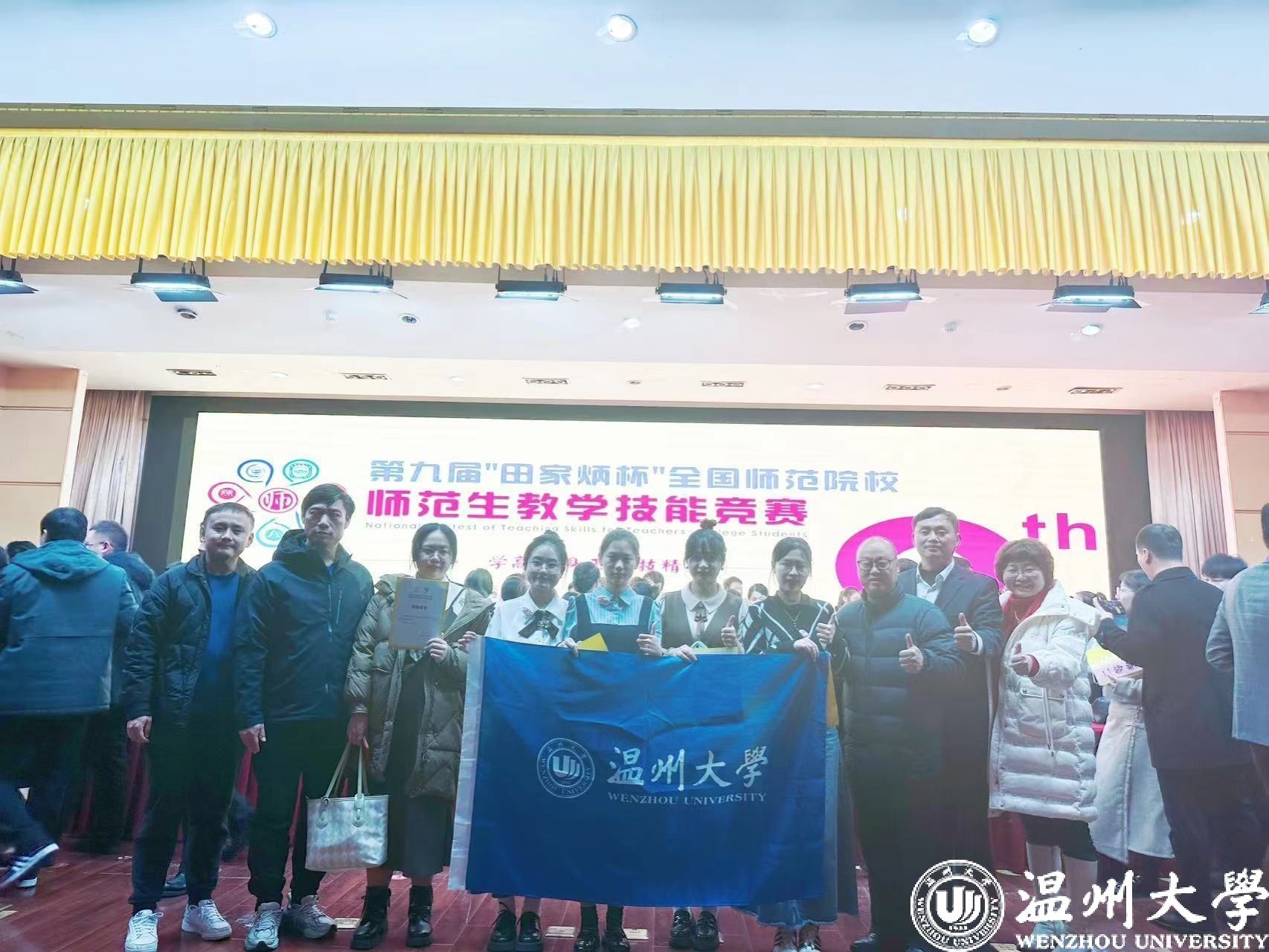
WZU Education Majors Achieve Sixth Place Nationwide in the 9th "Tian Jiabing Cup" National Teaching Skills Competition From December 29th to 31st, the finals of the 9th "Tian Jiabing Cup" National Teaching Skills Competition for education majors were held at Zhejiang Normal University. A total of 1611 participants from 226 universities nationwide competed in this event, with 10 participants from our university. They achieved 4 first prizes, 1 second prize, and 5 third prizes, ranking sixth in the nation for the number ...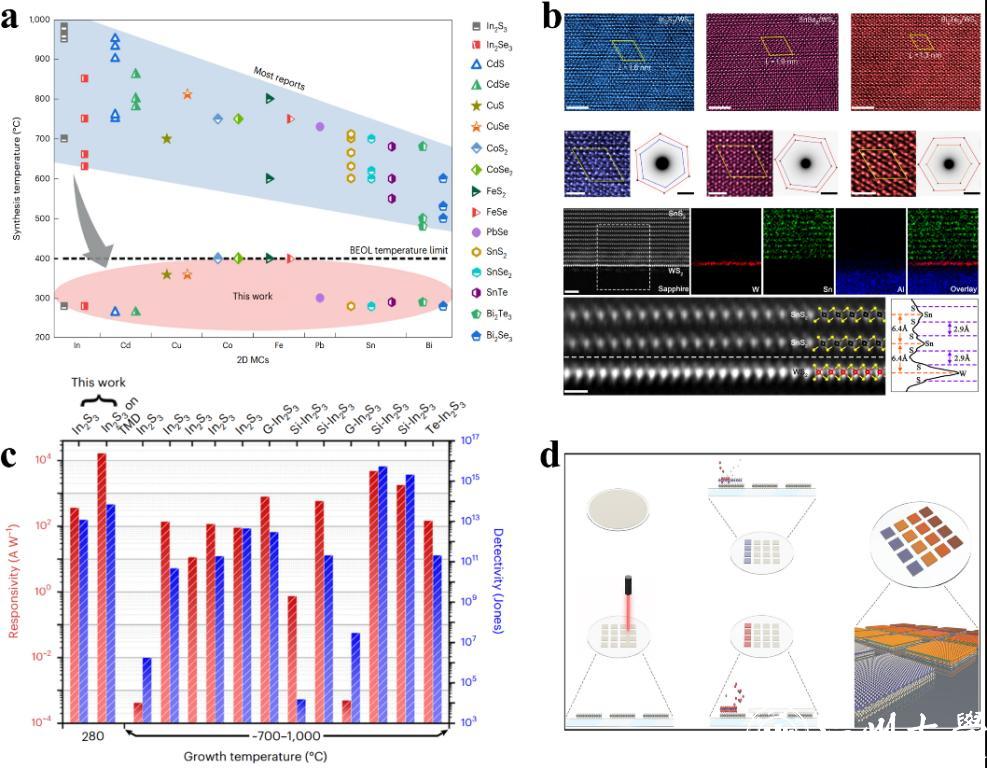
2023-10-17
Researcher ZHANG Lijie from the College of Chemistry and Materials Engineering Publishes Academic Paper in "Nature Nanotechnology", Sub-journal of Nature Two-dimensional materials possess novel physical properties such as atomic-level thickness, excellent electronic transport, and optoelectronic characteristics. They serve as ideal platforms for the development of high-performance electronic and optoelectronic devices, potentially extending the traditional silicon-based semiconductor industry based on "Moore's Law" and further enhancing chip tra...International Relations Office, Wenzhou University
Postal Address: 6th Floor, Administrative Building, South Campus, Wenzhou University, Chashan University Town, Wenzhou City, Zhejiang Province, China 325035
Tel: 0086-577-86680971 86598029
Fax: 0086-577-86598029
E-mail: fao@wzu.edu.cn